PICTURES GALLERY OF NASA PICTURES OF THE PLANETS
NASA - OUR SOLAR SYSTEM
06.25.12 - Scientists studying images from NASA's Cassini spacecraft have found that heat from within the planet powers the jet streams.
PHOTOJOURNAL: NASA'S IMAGE ACCESS HOME PAGE
publicly released images from various Solar System exploration programs
SOLAR SYSTEM EXPLORATION: PLANETS: MERCURY: GALLERY - NASA - HOME
We are NASA's Planetary Science Division. Our hardworking robots explore the planets and more on the wild frontiers of our solar system.
SOLAR SYSTEM EXPLORATION: : PLANETS - NASA - HOME
We are NASA's Planetary Science Division. Our hardworking robots explore the planets and more on the wild frontiers of our solar system.
NASA - HUBBLE'S NEPTUNE ANNIVERSARY PICTURES
A day on Neptune is 16 hours long, and Hubble took images of the planet every four hours. Some of Neptune's moons are also shown. (No audio.) Video Credit: NASA, ESA, and
NASA - NASA DISCOVERS FIRST EARTH-SIZE PLANETS BEYOND OUR SOLAR SYSTEM
compares artist's concept images of the first Earth-size planets found around a sun-like star to planets in our own solar system, Earth and Venus. Image credit: NASA
WELCOME TO THE PLANETS: MERCURY
Welcome to the Planets - Pictures of Mercury
PLANET PROFILES - WELCOME TO THE PLANETARY DATA SYSTEM
Planet Profiles. Mercury: Venus: Earth: Mars: Jupiter: Saturn: Uranus: Neptune: Pluto: Small Bodies
NASA - NEW PLANET DISCOVERED
images of new planet 2003UB313 Tenth Planet Discovered Image above: These time-lapse images of a newfound planet in our solar system, called 2003UB313, were
WELCOME TO THE PLANETS
A collection of some of the best images from NASA's planetary exploration program. The collection has been extracted from the interactive program "Welcome
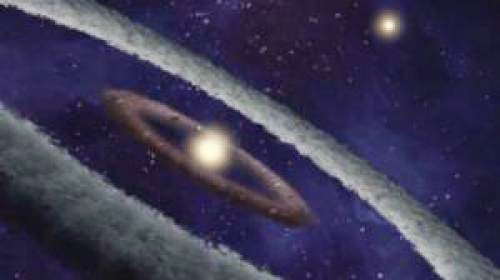
Birth of an Earth-like Planet. (NASA/JPL-Caltech)
Volunteers from the Planet hunters.org website, part of the Oxford University-led Zooniverse project, have discovered 15 new plants - missed by professional astronomers - orbiting in the zones of other stars where it is considered life may be possible.
Added to the 19 similar planets already discovered in so-called habitable zones, where the temperature is neither too hot nor too cold for liquid water, this new find points to a possible 'traffic jam' of strange worlds that could support life, it was reported in the online journal Science Daily.
The new possible planets were found by Planethunters.org volunteers, who did not see the planets directly but looked for a telltale dip in brightness as planets pass their parent stars.
After follow up work was done by the Keck telescope in Hawaii, one of the 15 planet candidates - Jupiter sized and orbiting a sun like star - has been confirmed with 99.9% certainty as a planet. It's been named as PH2 b and is the second planet to be found by planethunters.org.
"There is an obsession with finding earth-like planets but what we are discovering with planets such as PHs b is far stranger. Jupiter has several large-rich water moons. If such a planet had earth size moons, we'd see worlds with rivers, lakes and all sorts of habitats - a surprising scenario that might just be common"," Said Dr. Chris Lintott of Oxford University and the leader of Zooniverse.
Professor Debra Fisher of Yale University emphasized the importance of the work of the volunteers: "We are seeing the emergence of a new era in the planet Hunters project where our volunteers seem to be at least as efficient as the computer algorithms at finding planets orbiting at habitable zone distances from the host stars.
A report on the findings has been submitted to the Astrophysics Journal, with more than 40 volunteers acknowledged for their role.
Among the volunteers is Mark Hadley an electronics engineer from Faversham in South east England, "Now, when people ask me what I achieved last year I can say I achieved a possible new planet around a distant star! How cool is that?
While Roy Jackson, a retired Police Officer from Gateshead in North East England was a little more circumspect.
"It is difficult to put into words, the pleasure, wonderment and perhaps even pride that I have in some small way been able to assist in the discovery of a planet". "
Dr Lintott said that some of the planets found by the volunteers on their web browsers had actually been missed by professional astronomers.
"It remarkable to think that absolutely anyone can discover a planet"," he said.
"http://rt.com/news/amateur-astronomers-new-planets-545/"