Wednesday, February 10, 2010


Michael Salla Boa
returns to BoA : Audio for a full length interview to discuss Exopolitics. We'll be talking about the goals of Exopolitics, its tenuous relationship with Ufology, and Salla responds to some of the critics of the movement. We also discuss 911, the Symington Phoenix Lights story, the recent release of French UFO documents (and Salla's surprising response) and tons more.

Full Preview : We kick things off by getting some background on what Exopolitics is and what the goals are behind Exopolitics. We discuss how many people in Exopolitics come from Ufology, but that there is still a faction of anti-exopolitics leaning people in the field and how Michael sees Exopolitics overcoming this factioning and how Exopolitics is markedly different from Ufology. We get Michael's response to the critics of exopolitics, who are jaded by the activism or take issues with some of the whistleblower testimony cited by those in Exopolitics.

Harkening back to some of binnall's complaints about Ufology, we find out if there are specific benchmarks that the Exopolitical movement is aiming for, from both a scholastic and political point of view. We discuss whether or not the present political system is conducive to a pro-UFO candidate or point of view.

We find out where Michael sees Exopolitics fitting into a post-UFO Disclosure world and how it plans to prevent the marginalization and redundancy that many in Ufology expect to happen to the field, post-disclosure. We talk about how "proving UFOs are real" may turn out to be the death knell for Ufology, post-UFO disclosure. Michael explains his problem with framing the "UFO question" on a strictly scientific basis.

From there, we discuss one of the recent papers on exopolitics.org, "False Flag Operations, 911, and the Exopolitical Perspective". Michael explains what motivated him to write this piece, which is somewhat outside the usual UFO realm of exopolitics. He also talks about why the 911 researchers don't want to touch Ufology and we discuss the differences between these two fields of inquiry. We talk about how the freshness of 911 helps to override the ridicule factor that has dogged Ufology for decades.

Then we talk about the recent UFO media flap and what the exopolitical take on this flap is, specifically Michael talks about the Gov. Symington / Phoenix Lights story that exploded on the scene a few weeks ago. We also get his take on the anti-Symington sentiment within Ufology.

After that, we talk about the recent release of UFO information from the French government and Michael explains why he feels ambivalent to the story. We get his exopolitical take on the 2008 presidential election and Hilary Clinton.

Heading towards the end, we discuss the Exopolitics Institute, what it is and what it's goals are. That segues into a discussion about what to do, should there be disclosure, with government officials who are complicite with the UFO cover up. Michael also gives us a preview of the Earth Transformation Conference, to be held in Hawaii this May.

More Michael Salla, on BoA : Audio, The X-Conference Sessions

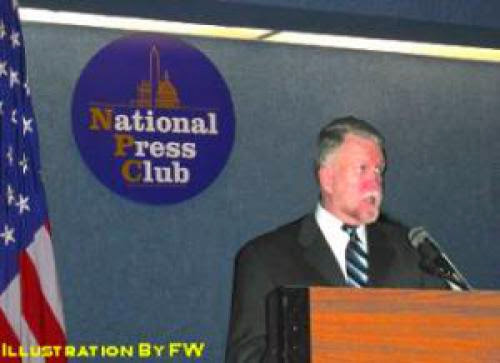
Michael Salla Bio


Dr. Michael E. Salla, is a pioneer in the development of exopolitics, the scholarly study of the main actors, institutions and processes associated with an extraterrestrial presence that is not acknowledged to the general public, elected officials or the mass media. His interest in exopolitics evolved out of his investigation of the sources of international conflict and its relationship with the undisclosed extraterrestrial presence. His groundbreaking Exopolitics: Political Implications of the Extraterrestrial Presence (Dandelion Books, 2004) presents the first scholarly framework for understanding the political implications of the extraterrestrial presence.

Dr. Salla is an internationally recognized scholar in international politics, conflict resolution and US foreign policy. He has also authored more than seventy articles, chapters, and book reviews on peace, ethnic conflict and conflict resolution. He has held academic appointments in the School of International Service the Department of Political Science, Australian National University, Canberra, Australia (1994-96); and the Elliott School of International Affairs, George Washington University, Washington D.C., (2002). He has a PhD in Government from the University of Queensland, Australia, and an MA in Philosophy from the University of Melbourne, Australia. He has conducted research and fieldwork in the ethnic conflicts in East Timor, Kosovo, Macedonia, and Sri Lanka, and organized peacemaking initiatives involving mid to high level participants from these conflicts.
His website is www.exopolitics.org


Ripping Blue Book A New One
By Billy CoxDe Void4-30-10 In November 2007, a dozen pilots, ex-military and civilian, all with top-drawer credentials, from as far away as Iran and Chile, convened at the National Press Club in Washington to urge the U.S. to launch a long-overdue public research project into UFOs. After an extremely limited news-cycle convulsion, the event tapered off into oblivion because the media were still busy chortling over Dennis Kuncinich's reluctant UFO eyewitness confession on national TV.Kucinich, UFOs, unicorns, sea serpents, pull my finger - whatever.So Robert Hastings knows what he's up against. And he's gone ahead and booked the National Press Club, anyway.That's where, on Sept. 27, the retired semiconductor lab analyst from New Mexico intends to play a little smash-mouth with the Air Force by giving its veterans a forum to tell the world how America can't stop UFOs from snooping around - and, in some cases, disabling - its nuclear arsenal.Did you get that? With the United States continuing to push for global arms-control agreements, Air Force whistle-blowers are ready to talk about how it can't even secure its own WMD from a phenomenon the Pentagon has refused to acknowledge for 40 years.None of this is new. Reports of UFOs idling over U.S. missile fields have filtered into the public domain for decades. In 2008, Hastings combined those accounts with his own research to produce a 600-page, bluntly titled book, "UFOs and Nukes." He's compiled stories from more than a hundred military veterans since the 1970s.What's new is this aggressive campaign to bring the eyewitnesses together under one roof. So far, seven have committed, including two former colonels. Should the media attend, the stories they'll tell should rattle taxpayers - multiple ICBM shutdowns, security-team scrambles, ad hoc secrecy oaths, none of which made it into the Air Force sham called Project Blue Book. There's even quasi-comic relief: One of the guys booked for the press conference was a geodetic surveyor who rolled his truck while attempting to flee a UFO at Malmstrom AFB.Here's the rub. Exactly how many veterans appear depends largely on money. Hastings has about a dozen willing to talk. He figures it'll take 15,000 to accommodate them. He's installed a PayPal button at his ufohastings.com Web page. Another option: donating frequent flyer miles or checks to Robert L. Salas - UDP at P.O. Box 1075, Ojai, CA 93204.Salas, a retired Air Force captain on duty as deputy missile combat crew commander at a Malmstrom silo when UFOs allegedly took more than half a dozen Minuteman warheads offline in 1967. Salas, who went public in on "Sightings" in 1995, says the fund is nonprofit, and that anything left over will be donated to charity."I'm under no illusions - I've been doing this since the 1970s," says Hastings, who's been lecturing on his research for almost 30 years. "There's only so much a small group can do against the powers that be."From WWII fighter pilots on record about UFOs scouting the Hanford plutonium factory months before Hiroshima/Nagasaki in 1945, to reports of UFOs buzzing Seal Beach Naval Weapons Station (rumored to house nukes in its stockpile) as recently as 2009, Hastings says the database points in one direction: "This isn't ancient history. It's an ongoing thing. As long as nuclear weapons exist, it's predictable that UFO events over nuclear sites will occur."There won't be much wiggle room when Air Force eyewitnesses assemble in Washington. They're either delusional, lying, or telling the truth. If they're delusional, what were these security risks doing policing our nuclear stockpiles? If they're lying, where's the incentive? If they're telling the truth, the scandal isn't in what happened, but in the cover-up.And if the media doesn't bother to hear them out, the scandal spreads exponentially.More...See Also:UFO Activity at Nuclear Weapons Sites to be Revealed at the National Press Club: Your Assistance is Needed! The Air Force Cover-Up: "Deception, Distortion, and Lying to The Public About the Reality of the UFO Phenomenon" SHARE YOUR UFO EXPERIENCEHELP SUPPORT THIS SITEABOUT DONATIONS Grab this Headline Animator

Monday, February 8, 2010


Planet Found In Nearest Star System To Earth
European astronomers have discovered a planet with about the mass of Earth orbiting a star in the Alpha Centauri system -- the nearest to Earth. It is also the lightest exoplanet ever discovered around a star like the Sun. The planet was detected using the HARPS instrument on the 3.6-metre telescope at ESO's La Silla Observatory in Chile. The results have been published by the journal Nature on Oct. 17, 2012.

"

This artist's impression shows the planet orbiting the star Alpha Centauri B, a member of the triple star system that is the closest to Earth. Alpha Centauri B is the most brilliant object in the sky and the other dazzling object is Alpha Centauri A. Our own Sun is visible to the upper right. The tiny signal of the planet was found with the HARPS spectrograph on the 3.6-metre telescope at ESO's La Silla Observatory in Chile [Credit: ESO/L. Calcada]"

Alpha Centauri is one of the brightest stars in the southern skies and is the nearest stellar system to our Solar System -- only 4.3 light-years away. It is actually a triple star -- a system consisting of two stars similar to the Sun orbiting close to each other, designated Alpha Centauri A and B, and a more distant and faint red component known as Proxima Centauri . Since the nineteenth century astronomers have speculated about planets orbiting these bodies, the closest possible abodes for life beyond the Solar System, but searches of increasing precision had revealed nothing. Until now.

"Our observations extended over more than four years using the HARPS instrument and have revealed a tiny, but real, signal from a planet orbiting Alpha Centauri B every 3.2 days," says Xavier Dumusque (Geneva Observatory, Switzerland and Centro de Astrofisica da Universidade do Porto, Portugal), lead author of the paper. "It's an extraordinary discovery and it has pushed our technique to the limit!"

The European team detected the planet by picking up the tiny wobbles in the motion of the star Alpha Centauri B created by the gravitational pull of the orbiting planet . The effect is minute -- it causes the star to move back and forth by no more than 51 centimetres per second (1.8 km/hour), about the speed of a baby crawling. This is the highest precision ever achieved using this method.

Alpha Centauri B is very similar to the Sun but slightly smaller and less bright. The newly discovered planet, with a mass of a little more than that of Earth , is orbiting about six million kilometres away from the star, much closer than Mercury is to the Sun in the Solar System. The orbit of the other bright component of the double star, Alpha Centauri A, keeps it hundreds of times further away, but it would still be a very brilliant object in the planet's skies.

The first exoplanet around a Sun-like star was found by the same team back in 1995 and since then there have been more than 800 confirmed discoveries, but most are much bigger than Earth, and many are as big as Jupiter . The challenge astronomers now face is to detect and characterise a planet of mass comparable to Earth that is orbiting in the habitable zone around another star. The first step has now been taken .

"This is the first planet with a mass similar to Earth ever found around a star like the Sun. Its orbit is very close to its star and it must be much too hot for life as we know it," adds St'ephane Udry (Geneva Observatory), a co-author of the paper and member of the team, "but it may well be just one planet in a system of several. Our other HARPS results, and new findings from Kepler, both show clearly that the majority of low-mass planets are found in such systems."

"This result represents a major step towards the detection of a twin Earth in the immediate vicinity of the Sun. We live in exciting times!" concludes Xavier Dumusque.

NOTES


The components of a multiple star are named by adding uppercase letters to the name of the star. Alpha Centauri A is the brightest component, Alpha Centauri B is the slightly fainter second star and Alpha Centauri C is the much fainter Proxima Centauri. Proxima Centauri is slightly closer to Earth than A or B and hence is formally the closest star.

HARPS measures the radial velocity of a star -- its speed towards or away from Earth -- with extraordinary precision. A planet in orbit around a star causes the star to regularly move towards and away from a distant observer on Earth. Due to the Doppler effect, this radial velocity change induces a shift of the star's spectrum towards longer wavelengths as it moves away (called a redshift) and a blueshift (towards shorter wavelengths) as it approaches. This tiny shift of the star's spectrum can be measured with a high-precision spectrograph such as HARPS and used to infer the presence of a planet.

Using the radial velocity method, astronomers can only estimate a minimum mass for a planet as the mass estimate also depends on the tilt of the orbital plane relative to the line of sight, which is unknown. But, from a statistical point of view, this minimum mass is often close to the real mass of the planet.

NASA's Kepler mission has found 2300 candidate planets using an alternative method -- searching for the slight drop in the brightness of a star as a planet passes in front of it (transits) and blocks some of the light. The majority of planet candidates detected by this transit method are very distant from us. But, in contrast, the planets found by HARPS are around stars close to the Sun -- with the new discovery being the closest yet. This makes them better targets for many kinds of additional follow-up observations such as characterising the planet's atmosphere.

The habitable zone is a narrow annular region around a star in which water may be present in liquid form if conditions are right.

ESPRESSO, the Echelle SPectrograph for Rocky Exoplanet and Stable Spectroscopic Observations, is to be installed on the ESO Very Large Telescope. Currently undergoing final design, it is scheduled to start operating in late-2016 or early-2017. ESPRESSO will feature radial velocity precision of 0.35 km/hour or less. For comparison, Earth induces a 0.32 km/hour radial velocity on the Sun. This resolution should thus enable ESPRESSO to discover Earth-mass planets in the habitable zone. The ESPRESSO consortium is led by team members responsible for the current discovery.

"Source: European Southern Observatory (ESO) [October 16, 2012]"

Sunday, February 7, 2010


This summary is not available. Please click here to view the post.


By Stanton Friedman

www.stantonfriedman.com

(c) 4-11-13

As a scientist who has been studying the UFO evidence since 1958, I must commend ASTRONOMY for publishing such a splendid example of the intellectual bankruptcy of the pseudoscience of anti-ufology,namely Phil Plait's "The Science Behind UFOs" (May 2013). He avoids all the science! There are 5 large scale scientific studies. None are mentioned. There are at least 12 PhD Theses about UFOs. None are mentioned. There are numerous radar visual accounts. None are mentioned. There are more than 5000 Physical Trace Cases collected by Ted Phillips from 95 countries. None are mentioned. There are a number of well investigated UFO abduction cases investigated by Professionals such as Psychiatrist Dr. John Mack of Harvard. None are mentioned.

The largest study is "Project Blue Book Special Report No. 14" done by engineers and scientists at Battelle Memorial Institute under contract to the USAF. It has over 200 tables, charts, graphs, maps, etc and deals with 3201 UFO sightings of which 21.5% were finally listed as UNKNOWNS, completely separate from the 9.3% listed as Insufficient Information. The better the quality of the sighting the more likely to be an UNKNOWN.A chi-square statistical analysis showed that the probability that the UNKNOWNS were just missed knowns was less than 1%.

The 247 page "Symposium on Unidentified Flying Objects: Hearings Before the Committee on Science and Astronautics, U.S. House of Representatives",July 29, 1968, provides testimony from 12 scientists, three of whom were astronomers. One was Dr. J. Allen Hynek, Chairman of the Astronomy Department at Northwestern University, and for more than 20 years consultant to the USAF Project Blue Book. His book "The UFO Experience: A Scientific Inquiry" should be required reading and contains many intriguing sightings. The most comprehensive presentation was by Dr. James E. McDonald, Senior Physicist in the Department of Atmospheric Sciences at the University of Arizona. He covered 41 separate cases including sightings by astronomers such as Dr. Clyde Tombaugh, the discoverer of the planet Pluto, and multiple witness radar visual cases.

The University of Colorado's "Scientific Report on UFOs "(The Condon Report) included information on 117 cases of which, according to a special UFO Subcommittee of the American Institute of Aeronautics and Astronautics, 30% could not be identified..This book has the folllowing statement about the Trent Photo from McMinnville, Oregon, May 1950, noted by Plait. "This is one of the few UFO Reports in which all factors investigated, geometric, psychological, and physical appear to be consistent with the assertion that an extraordinary flying object, silvery, metallic, disk shaped, tens of meters in diameter and evidently artificial, flew within sight of two witnesses".

The explanation given for the earlier Phoenix Lights as representing jets flying in formation is ridiculous. The object was huge, silent, flying slowly, blotting out the sky. It had no red and green lights. An important witness was Arizona governor, Fife Symington, a former air force officer and pilot. Plait acts as though all UFO sightings are just lights in the sky which are easily identified by somebody like him"A scientist, a Skeptic, a Hardnosed realist". The facts indicate that this is totally untrue.

One possible explanation for Plait's complete failure to deal with the science of UFOs is that, considering the date, it was written as an April Fool's Day joke. If so, I apologize.

"Editors note"-For those that which to express their opinion to the editors of Astronomy Magazine, their e-mail is as follows: letters@astronomy.com -"FW".

Continue Reading...

See Also:


Pseudo-Science of Anti-Ufology

UFOs & Science: If One Cant Attack the Data, Attack the People - Its Easier!

VIDCAST: Flying Saucers [UFOs] and Science - Stanton Friedman LIVE

SHARE YOUR UFO EXPERIENCE

Read more >>


Tuesday, February 2, 2010


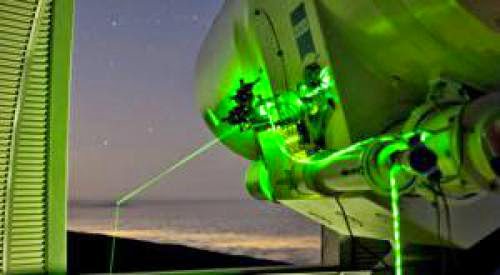
Nasa Prepares To Launch 600Mbps Space Laser System To Replace Conventional Radio Links
NASA is preparing to get going the Astral Laser Communications Face (LLCD), a testbed that decision use lasers to cheeky and receive data in the middle of Scrabble and the Moon. This decision be the first time that NASA uses lasers otherwise of representative S-band radio side to network via spacecraft, allowing for unmanageable data rates of up to 600 megabits per pass quickly, calculate then overriding afar smaller amount strength and requiring afar smaller antennae. Really, changing to laser-based communications decision permission NASA to receive afar bigger data from spacecraft, allowing them to be outfitted via high-res cameras and other up to date sensors that construct bigger data than S-band associates can backing.Visual communications, as averse to radio popularity (RF) communications (or plainly "radio"), are appealing for three key reasons: Enormous bandwidth, chief warranty, and minor output strength provisions. All of these traits rent from the popularity of visual and radio side. Since S-band signals are in the 2-4GHz large quantity (similar to your GSM, LTE, or WiFi attitude), the laser light hand-me-down by the LLCD (near-infrared in this case) is think in hundreds of terahertz. As a end result, the wavelength of S-band signals is answer 10cm, calculate near-infrared has a wavelength of parade 1000nm - or about 100,000 era shorter. Not just can you review a lot bigger data in the field of in the field of the vastly inborn space, but there's then "terahertz" (compared to megahertz in the S band) of free, unlicensed space that can be hand-me-down.Being the wavelength is smaller, the provision and get-together antennae can then be a lot smaller, allowing for smaller/lighter spacecraft and afar easier hail put forward on Scrabble. By the time a representative RF signal arrives at Scrabble from slim space, the dainty can cover an area as large as 100 miles, requiring very important serving dish antennae (such as the Resounding Collapse Trench) to collect folks signals up. Clarity laser signals, which are 100,000 era shorter, requires a afar smaller serving dish. As a implication, due to these beams being afar tighter, they're afar harder for an challenger to snoop on, accordingly rising warranty. Transmitting data via laser then requires smaller amount strength than RF.The LLCD decision be deployed upon the Astral Consideration Dirt Neighborhood Traveler (LADEE), which is straight for get going in September. LADEE (which possibly will be uncommunicative lay-dee or lad-ee, we're not sure) decision go around the Moon, seeking to show off whether the technical flower observed by Apollo astronauts was caused by stain in the lunar apparition. Distinguish to the LLCD, NASA decision influence a 20Mbps uplink to LADEE (so they say 4,800 era closer than actual S-band uplinks), and LADEE decision influence a 600Mbps downlink to NASA (five era closer than current best lunar-distance associates). The group of representatives decision just last for 30 days, after which, if it's a punch, NASA decision get going the long-duration Astral Communications Get on Face (LCRD), which decision difficulty a roll aboard a announcement Loral satellite. The LCRD decision permission NASA to drive increase rancid of space laser communications, via the be attracted to of at last replacing RF associates in far off spacecraft.Sad pitch, space laser communications decision permission for the enterprise of spacecraft that are smaller, cheaper, and reliable of bigger better-quality functionality. With 600Mbps of downlink capacity, we'll be able to wear spacecraft via high-resolution cameras and other better-quality sensors that construct endless amounts of data - and unite that data in real time, totally than waiting for the data to by design filter over the airwaves.Now read: Wireless neutrino network possibly will outmoded out of order the center of the Scrabble

Source: mystery-sky-lights.blogspot.com


Phantoms And Monsters Paranormal Activity Bigfoot Mothman Ufos And Other Unexplained Phenomena
As an added commentary to the post below about Dr. Ketchum's research,I'm posting the link to Lon Strikler's article at Phantoms and Monsters on the Coast to Coast interview with Ketchum. (And, like Lon, I too have a lot of respect for George Knapp.)

Phantoms and Monsters: Paranormal Activity, Bigfoot, Mothman, UFOs and Other Unexplained Phenomena: I am also frustrated...by the conjecture and rumors whipped up by a large number of Bigfoot researchers and enthusiasts, not the DNA study. Knapp also states:

The most vehement, the nastiest reaction to the aforementioned [Bigfoot] DNA study has come from those that think of themselves as Bigfoot researchers.

I have read a few responses to the C2C interview, many of which claim Knapp is an apologist for Dr. Melba Ketchum and the DNA study. Once again, we have someone who is privy to Dr. Ketchum's results and criticized for defending the study.

These salvos by Bigfoot dogmatics are clearly a 'push back' against those who are willing to have an open mind and not afraid to speak out.